 blog
Trusted Expertise in Agricultural Equipment Finance
Table of Contents
- What Trusted Expertise in Agricultural Equipment Finance Means
- Farm Machinery Finance Options: Understanding Your Choices
- Farm Equipment Leasing vs Ownership: When Each Makes Sense
- Seasonal Equipment Finance Repayments Aligned to Your Cash Flow
- Farm Equipment Finance Eligibility: What Providers Look For
- How to Evaluate Trusted Expertise Providers
- Common Mistakes When Choosing Agricultural Equipment Finance
- Frequently Asked Questions
Last Updated: October 18, 2026
What Trusted Expertise in Agricultural Equipment Finance Means
Trusted expertise in agricultural equipment finance means access to advisors who understand farming operations deeply and can match you with financing solutions that align with your cash flow and seasonal patterns. It's not just about getting a loan, it's about working with partners who recognise that harvest timing, commodity prices, and equipment replacement cycles all shape what you can actually afford.
When you're managing land, livestock, or contracting work across multiple sites, generic finance providers often miss the nuances. A trusted provider knows why a spring purchase deadline differs from an autumn one. They understand that a combine harvester purchase in July carries different cash implications than one in November. This expertise becomes invaluable when you're weighing whether to finance, lease, or buy outright.
At Agri-Linc, we've worked with farmers and agricultural engineers for over a century, and we've seen how the right financing structure transforms equipment decisions from financial headaches into strategic tools that support growth.
Farm Machinery Finance Options: Understanding Your Choices
Several financing routes exist for agricultural equipment, and each suits different situations. Understanding the trade-offs helps you avoid overpaying or locking into terms that don't match your operation.
Hire purchase lets you own equipment after making fixed monthly payments. You build equity immediately, and once paid off, the machinery is yours with no ongoing obligations. The downside is you carry full maintenance risk and depreciation.
Equipment leasing spreads costs across the lease term without ownership. Monthly payments are often lower than purchase financing, and maintenance may be included depending on the agreement. However, you never own the asset, and lease terms can restrict how you use the equipment.
Bank loans offer flexibility to purchase any machinery you find, but lenders often require significant deposits and may not understand seasonal cash flow variations. Interest rates depend on your credit history and farm profitability.
Manufacturer financing is sometimes available directly from equipment makers. Terms can be competitive if you're buying new, but options narrow if you need used machinery or parts from multiple brands.
The choice depends on your cash flow pattern, how long you'll use the equipment, and whether you prefer predictable monthly costs or eventual ownership. Providers with agricultural expertise can help you model each option against your actual seasonal income.
Farm Equipment Leasing vs Ownership: When Each Makes Sense
Leasing appeals to operators who want to upgrade regularly, avoid major repairs, and keep monthly costs predictable. If you operate across multiple sites or run a contracting business where equipment sits idle seasonally, leasing removes the burden of storing and maintaining machines between jobs.
Ownership makes sense if you're using equipment year-round, have the capital available, or plan to keep machinery for 8+ years. Owned equipment becomes an asset you can use if you need credit later. You're also free to modify or repair it however you choose.
The financial crossover point depends on usage intensity and residual value. Heavy-use operations often own because per-hour costs drop sharply over time. Seasonal or variable-use operations lean toward leasing because they avoid carrying idle assets.
A common mistake is choosing based purely on monthly payment size. Total cost of ownership, including repairs, storage, insurance, and eventual resale, often tips the scales toward leasing for smaller operations or those with unpredictable equipment needs.
Seasonal Equipment Finance Repayments Aligned to Your Cash Flow
This is where trusted expertise in agricultural equipment finance becomes genuinely valuable. Standard finance products assume monthly payments, but farming income clusters around harvest periods and livestock sales.
Providers who understand agriculture can structure repayments to match your actual cash inflows. You might pay minimal amounts in spring and summer, then larger payments after harvest when commodity sales settle. Some agreements allow payment holidays during slow months.
Without this flexibility, you're forced to cover finance payments from operating reserves during low-income months, a drain that can force you to sell livestock early or delay necessary repairs.
When evaluating providers, ask explicitly how they handle seasonal adjustments. Some allow you to restructure payments annually. Others build seasonal flexibility into the contract from the start. The difference between rigid and flexible terms can mean thousands of pounds across a typical 5-year finance agreement.
Farm Equipment Finance Eligibility: What Providers Look For
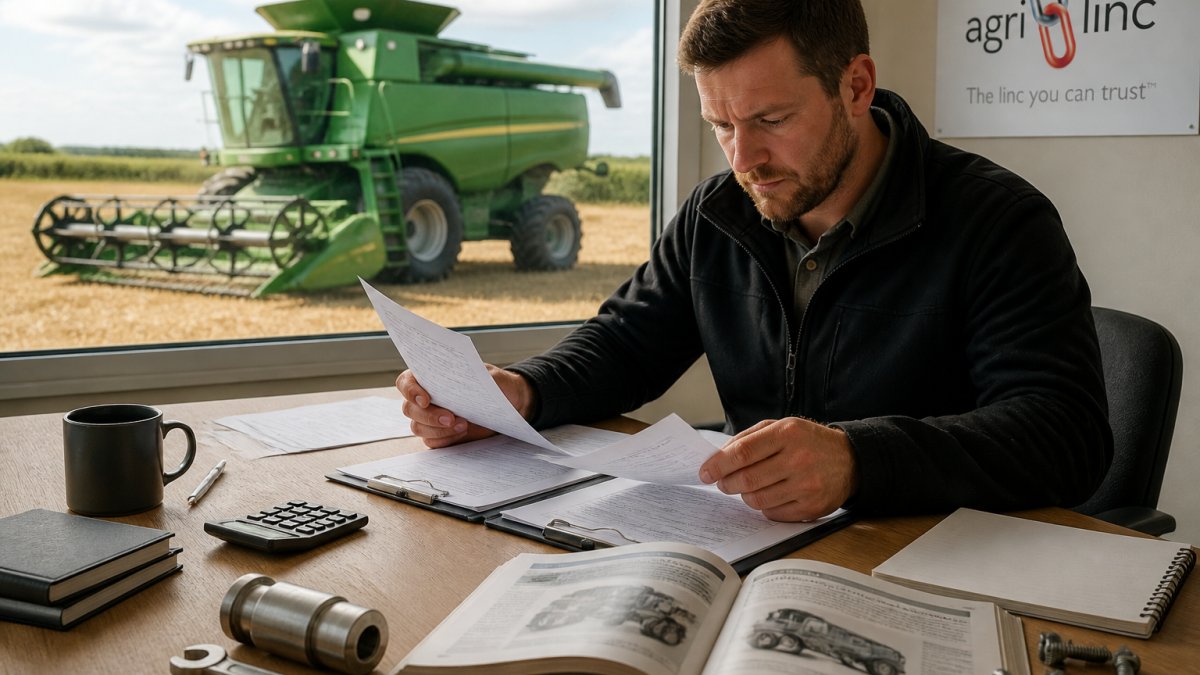
Lenders assess agricultural finance applications differently from consumer lending. They're less interested in your personal credit score and more focused on farm business viability.
Expect providers to request:
- Business accounts showing farm turnover and profitability over 2-3 years
- Details of existing equipment and its condition (lenders want to know what you're already operating)
- Land ownership or tenancy documentation (security for the lender)
- Seasonal income projections for the coming year
- Details of other borrowing against the farm
Providers with agricultural expertise understand that a poor year doesn't necessarily indicate poor management, weather, commodity prices, and disease can all affect profitability independently of how well you operate.
Smaller operations or those with variable income may find mainstream banks reluctant to lend. Specialist agricultural finance providers are more flexible because they understand seasonal volatility and can structure agreements accordingly.
How to Evaluate Trusted Expertise Providers
Expertise in agricultural equipment finance means more than just offering loans. Look for providers who ask detailed questions about your operation before proposing solutions.
A provider with genuine expertise will:
- Ask about your equipment replacement cycle and planned purchases over the next 3-5 years
- Understand the difference between seasonal and year-round cash flow
- Offer flexible repayment structures, not just standard monthly terms
- Know the residual values of used equipment across different brands
- Have experience with multi-site operations and bulk purchases
- Provide transparent fee structures with no hidden charges
Red flags include providers who offer instant decisions without understanding your business, quote rates without assessing your specific situation, or push you toward ownership when leasing better suits your needs.
The real test is whether they listen more than they sell. A trusted provider asks about your operation's rhythm, your equipment strategy, and your growth plans, then proposes financing that supports those goals rather than fitting you into a standard product.
Common Mistakes When Choosing Agricultural Equipment Finance
Many operators overpay or lock into unsuitable terms by overlooking these common pitfalls.
Ignoring total cost of borrowing. Compare the full amount you'll repay, not just monthly payments. A lower monthly figure sometimes means longer terms and higher total interest.
Accepting rigid payment schedules. If a provider won't discuss seasonal flexibility, walk away. Your cash flow doesn't fit a standard calendar, and neither should your repayments.
Financing through the equipment dealer alone. Dealer finance is convenient but often more expensive than specialist agricultural lenders. Always compare options.
Underestimating maintenance costs in lease agreements. Some leases include maintenance; others don't. Factor in realistic repair and servicing costs when comparing options.
Not planning for equipment replacement cycles. Providers with agricultural expertise help you map future needs so you're not scrambling for emergency finance when machinery fails during peak season.
Choosing based on one quote. Agricultural finance varies significantly between providers. Get at least three detailed proposals before deciding.
Finding trusted expertise in agricultural equipment finance means working with advisors who understand your operation's rhythm and can structure solutions accordingly. Whether you're expanding a family farm, managing a contracting business across multiple sites, or running a specialist operation, the right financing partner transforms equipment decisions from financial strain into strategic tools that support growth.
Agri-Linc brings over a century of experience sourcing and supporting agricultural machinery and parts. Our team understands the equipment landscape across 140+ brands and can connect you with financing solutions tailored to farming's unique cash flow patterns. Get in touch to discuss how flexible equipment finance can support your operation's growth.
Frequently Asked Questions
What finance options are available for agricultural equipment?
Agricultural equipment finance typically includes hire purchase agreements, equipment leasing, bank loans secured against machinery, and seasonal finance products that align repayments with harvest income. Trusted expertise providers assess your operation's cash flow, machinery requirements, and growth plans to recommend the option that best suits your situation. Some arrangements allow flexibility to upgrade or replace equipment as your farm evolves, whilst others offer fixed terms suited to established operations.
Can finance repayments be tailored to seasonal farm income?
Yes. Seasonal equipment finance repayments are specifically designed for farming operations where cash flow varies throughout the year. Providers with agricultural expertise understand that income concentrates around harvest periods and offer payment schedules that defer or reduce repayments during quieter months. This flexibility prevents cash flow strain during lower-income periods and aligns repayment obligations with when you actually receive revenue from crop sales or livestock.
What information is needed to apply for farm equipment finance?
Farm equipment finance eligibility typically requires proof of business registration, recent accounts or tax returns showing farm income, details of existing debts, information about the specific machinery you wish to finance, and evidence of your farming operation (land ownership or tenancy documents). Providers with genuine agricultural expertise understand seasonal income patterns and may ask about your cropping or livestock cycle. Having this documentation ready and working with providers who understand farming operations streamlines the application process.
Is it better to lease or buy farm machinery?
Leasing suits operations needing flexibility, wanting to avoid large capital outlays, or preferring to upgrade equipment regularly. Ownership through finance works well for established farms with stable cash flow and long-term machinery needs. Trusted expertise providers help you weigh factors like your operation's size, equipment utilisation rates, maintenance capacity, and whether you prefer predictable monthly costs or long-term asset ownership. The right choice depends entirely on your farm's specific circumstances.