 blog
blog
Compact Tractor vs Farm Tractor: Which Suits Your Land?
Table of Contents
- Compact Tractor vs Farm Tractor: The Core Differences at a Glance
- Choosing the Right Tractor Size for a Small Farm
- Compact Tractor Implements: What They Can and Cannot Handle
- Tractor Running Costs: Where the Money Actually Goes
- Used Compact Tractor Checklist: What to Inspect Before You Buy
- When a Full-Size Farm Tractor Is the Only Sensible Choice
- Conclusion: Matching the Machine to the Job
- Frequently Asked Questions
Last Updated: October 14, 2026
Compact Tractor vs Farm Tractor: The Core Differences at a Glance
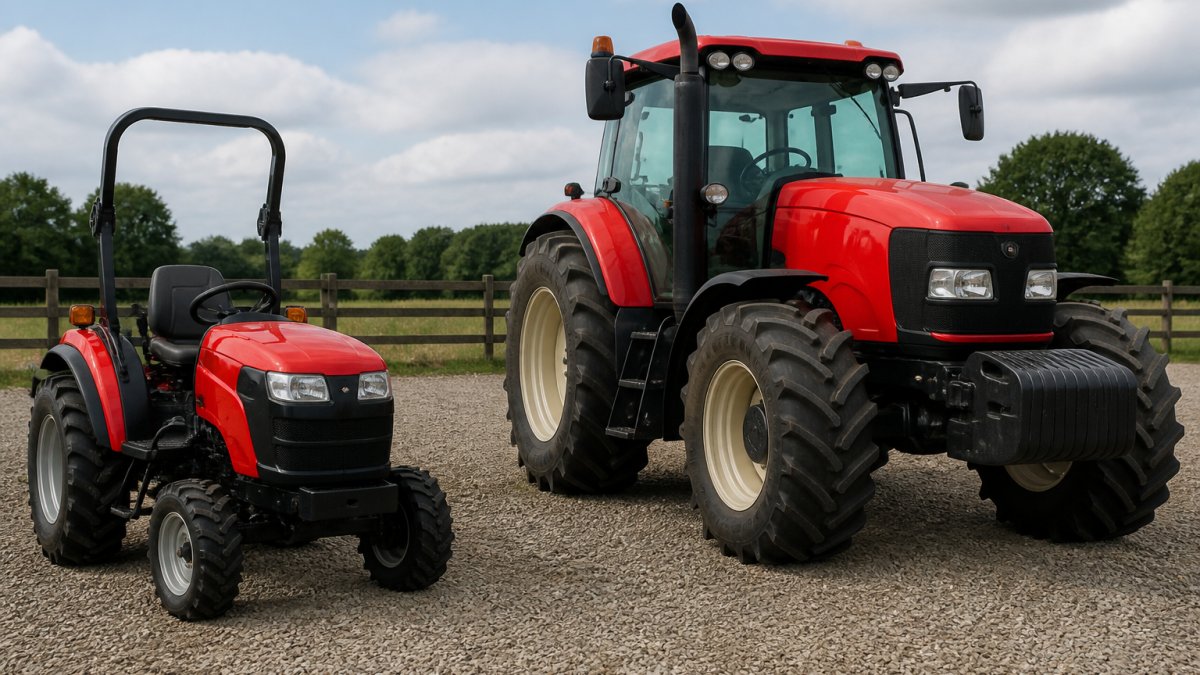
Choosing between a compact tractor vs farm tractor comes down to three things: size, horsepower, and what you actually need to lift, pull and power. A compact tractor typically runs 20-60 horsepower with a footprint narrow enough to work between orchard rows and inside livestock sheds. A full-size farm tractor starts around 80 horsepower and climbs well past 300, built for broad acres and heavy draft work.
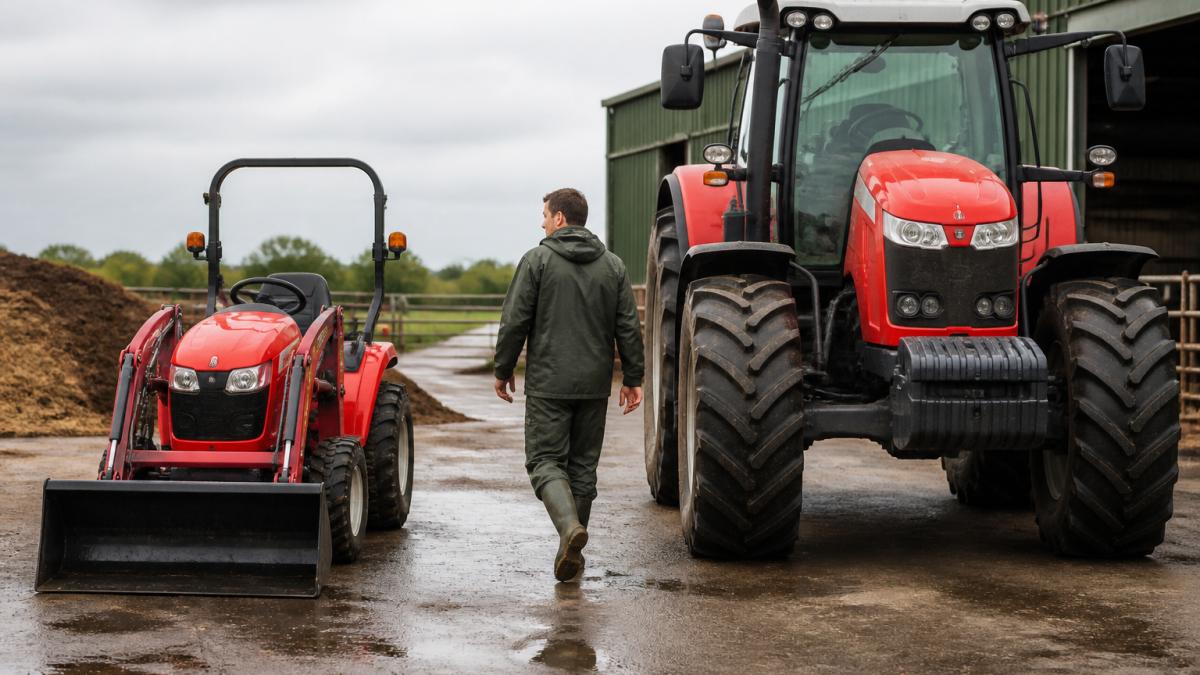
The practical difference shows up in the yard, not the spec sheet. A compact machine turns tighter, fits through a 2.4-metre gateway, and runs on less fuel per hour. A full-size tractor drags a five-furrow plough all day without complaint but will not fit down the track to your hen house.
At Agri-Linc, we have spent a century supplying both ends of that spectrum, and the buying decision rarely comes down to which machine is "better". It comes down to matching the machine to the job.
Factor | Compact Tractor | Full-Size Farm Tractor |
|---|---|---|
Typical power | 20-60 hp | 80-300+ hp |
Best for | Smallholdings, orchards, yards | Arable, large livestock, contracting |
Manoeuvrability | Tight turning, narrow frame | Wide, stable, less agile |
Implement range | Loaders, mowers, small tillage | Ploughs, balers, heavy trailers |
Running costs | Lower fuel and servicing | Higher fuel, tyres, parts |
Price bracket | Lower entry point | Significantly higher |
For guidance on machinery categories and safe operation, the Health and Safety Executive agriculture guidance sets out the legal duties that apply to any tractor you put to work.
Choosing the Right Tractor Size for a Small Farm
Tractor size for a small farm should be driven by your heaviest regular task, not your lightest. If you run 40 acres of grazing and muck out a few sheds, a 35-50 hp compact will cover almost everything. If you bale your own silage or pull a loaded grain trailer on public roads, you need the weight and braking capacity of a larger machine.
Many smallholders buy too much tractor. The result is a machine that will not fit through gateways, burns more diesel than the work justifies, and costs more to service. Others buy too little and end up hiring in for every heavy job, which erodes the savings fast.
A simple rule we give customers: write down your five most frequent jobs and your single heaviest job. Size for the heaviest, then check the compact still fits your tightest access point. If it does not, you have a genuine case for two machines or for contracting out the heavy work.
Compact Tractor Implements: What They Can and Cannot Handle
Compact tractor implements cover far more ground than most buyers expect, but there are real limits. Front loaders, rotary mowers, box graders, post-hole diggers, small rotavators and trailer hitches all work well on a 30-50 hp machine. What they struggle with is sustained heavy draft work and anything demanding high hydraulic flow.
The constraint is usually weight and lift capacity, not raw horsepower. A compact loader might lift 500-800 kg to full height, which handles hay bales and pallets but not a bulk fertiliser bag. Three-point linkage lift is similarly modest.
Where compacts fall short:
- Deep ploughing on heavy clay
- Large round baling at pace
- Pulling fully loaded grain trailers on the road
- Powering high-flow implements like big flail mowers
Where they excel:
- Yard and shed work with a loader
- Topping paddocks and verges
- Orchard and polytunnel work
- Fencing, post driving and small-scale cultivation
The honest answer is that a compact handles 80% of jobs on a smallholding and none of the jobs that define a commercial arable operation.
Tractor Running Costs: Where the Money Actually Goes
Tractor running costs split into fuel, servicing, tyres, depreciation and downtime. Fuel is the visible cost, but depreciation and repairs often outweigh it over a machine's life.
A compact tractor generally burns less fuel per hour and takes cheaper tyres and smaller service parts. A full-size tractor costs more on every line, but it also does more work per hour, so the cost per acre can actually be lower on large fields.
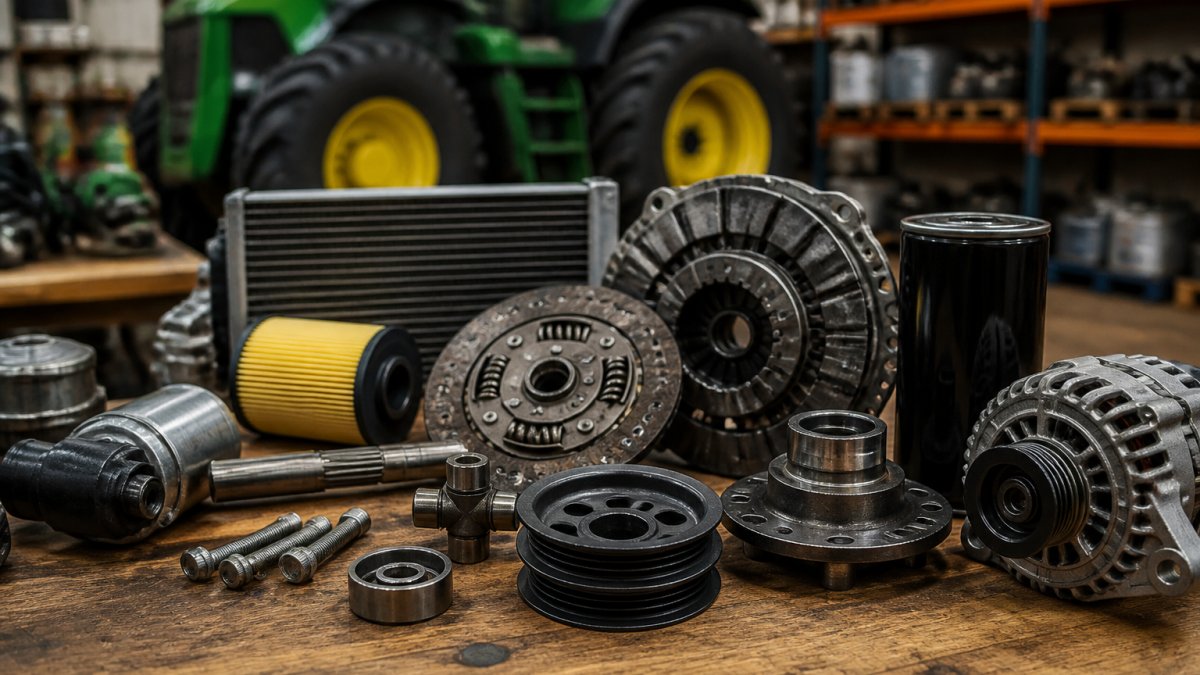
The cost that catches people out is downtime. A machine off the road during harvest costs far more than the part that failed. That is why buying from a supplier with genuine stock depth matters more than shaving a few pounds off the purchase price. Agri-Linc carries over 12,000 products across more than 140 brands precisely so a failed hydraulic seal does not become a lost day.
Used Compact Tractor Checklist: What to Inspect Before You Buy
A used compact tractor checklist should cover hours, hydraulics, transmission, tyres and evidence of abuse. Work through it methodically, because cosmetics hide mechanical problems well.
- Confirm the hour meter reading against service records and wear on pedals and seat
- Check for hydraulic leaks around the loader rams, rear remotes and lift arms
- Test the three-point linkage raises and holds under load
- Run the transmission through every gear, including under load
- Inspect tyre condition and check for mismatched sizes on four-wheel-drive models
- Look for cracks or weld repairs on the loader frame and front axle
- Check the PTO engages smoothly and holds speed
- Start from cold and watch for excessive smoke or rough running
- Inspect the radiator for debris blocking and signs of overheating
- Confirm all lights, brakes and the handbrake work
For road use, remember that any tractor travelling on public roads must meet lighting and braking requirements, and the DVLA guidance on agricultural vehicle registration explains what applies to your machine.
When a Full-Size Farm Tractor Is the Only Sensible Choice
A full-size farm tractor becomes the only sensible choice when your work demands sustained power, weight or hydraulic flow that no compact can deliver. Broadacre ploughing, heavy baling, large-scale muck spreading and hauling bulk loads on the road all sit firmly in this category.
If your operation runs hundreds of acres, or you contract across multiple sites, the economics flip. A compact would simply take too long and would be worked beyond its design limits. Full-size machines also carry the stability and braking needed for road work with heavy trailers.
The trade-off is real. You lose manoeuvrability, spend more on fuel and parts, and need more storage space. For the right operation, none of that matters because the machine earns its keep every day.
That is the throughline here: the correct tractor is the one that matches your heaviest regular job and your tightest access, not the one with the most impressive badge.
Conclusion: Matching the Machine to the Job
The compact tractor vs farm tractor decision is not about prestige, it is about fit. Size for your heaviest regular task, check your access points, and be honest about how much work the machine will actually do each year.
When you are ready to buy, Agri-Linc can help. We are a family-owned business established in 1924, rated 4.8/5 from over 2,180 reviews, and we stock new and used machinery plus the parts to keep it running. Our inventory spans more than 140 brands, and our team knows the difference between a hydraulic seal for a combine and one for a compact loader.
Get in touch with Agri-Linc to find the right machine and the parts to keep it working.
Frequently Asked Questions
What is the difference between a compact tractor and a farm tractor?
The main differences are size, power and capability. A compact tractor typically produces around 20-60 horsepower, has a narrower frame and is designed for tight spaces, loader work and lighter implements. A full-size farm tractor usually delivers 80 horsepower and above, with wider axles, greater hydraulic capacity and the weight needed to pull heavy ploughs and balers across large fields. The compact tractor vs farm tractor decision usually comes down to acreage, ground conditions and the heaviest implement you need to run.
Is a compact tractor powerful enough for a small farm?
For most smallholdings and farms under roughly 50 acres, a compact tractor handles the core jobs: loader work, mowing, topping, harrowing, fence posting and yard scraping. The limit appears when you need to pull a heavy plough, run a large round baler or work steep, wet ground at speed. Check the implement's power and weight requirements against the tractor's PTO horsepower and lift capacity before committing, rather than assuming the engine size tells the whole story.
Can a compact tractor use the same implements as a farm tractor?
Some implements are shared, but many are not. Category 1 three-point linkage implements, which most compact tractors use, are smaller and lighter than the Category 2 or 3 implements common on full-size farm tractors. A compact tractor can run a small tipping trailer, a 1.5m topper or a basic chain harrow, but it cannot safely lift or power implements sized for a 150 horsepower machine. Always match the implement's weight, PTO speed and hydraulic demand to the tractor before buying.
Are compact tractors cheaper to run than larger farm tractors?
Generally yes, but the gap is narrower than many buyers expect. A compact tractor burns less fuel per hour, uses smaller and cheaper tyres, and its service parts cost less. However, if it is under-specified for the job, it works harder and longer to do the same task, which erodes the saving. Running costs also include insurance, depreciation and the cost of downtime. Speak to a supplier who stocks parts across multiple brands to keep replacement costs predictable.