 blog
blog
Agricultural Machinery Parts: A Buyer's Guide
Table of Contents
- Why Access to Quality Agricultural Machinery Parts Matters
- Agricultural Machinery Parts: Identifying What You Need
- OEM Agricultural Parts vs Aftermarket Options
- Used Farm Equipment Inspection: What to Check Before Buying
- Agricultural Machinery Maintenance: Essential Parts to Keep in Stock
- Sourcing New and Used Agricultural Machinery Efficiently
- Getting the Right Parts First Time: Avoiding Common Ordering Mistakes
- Conclusion
- Frequently Asked Questions
Last Updated: October 14, 2026
Why Access to Quality Agricultural Machinery Parts Matters
Getting the right agricultural machinery parts when you need them can mean the difference between a productive season and costly downtime. When a critical component fails during harvest or peak operations, every hour without a replacement affects your bottom line. Access to a wide range of new and used agricultural machinery ensures you can keep equipment running smoothly across multiple sites and seasons.
The challenge most farm operations face isn't finding any parts, it's finding the right parts quickly, at a reasonable cost, with confidence they'll fit and perform. Many farmers waste time phoning dealers, checking multiple suppliers, or waiting weeks for obscure components. At Agri-Linc, we've built our business around solving exactly this problem: we stock over 12,000 products from more than 140 brands, giving agricultural engineers and farm managers direct access to both new and used equipment without the traditional friction.
The real value isn't just inventory size. It's reliability. When you're managing large-scale commercial operations or coordinating parts across multiple farm sites, you need a supplier who understands your workflow, knows which parts matter most, and can deliver without guesswork.
Agricultural Machinery Parts: Identifying What You Need
Before you can source the right component, you need to know exactly what you're looking for. This sounds obvious, but many orders go wrong because engineers and farm managers don't have complete information about their machinery.
Start with your equipment's documentation. The operator's manual, parts diagram, or service schedule will list components by their official designation. Write down the machine make, model, year, and serial number, these details prevent costly mistakes.
When documentation isn't available (common with older or inherited equipment), take photographs of the damaged part from multiple angles. Include any markings, part numbers, or manufacturer stamps visible on the component itself. This visual record helps a supplier identify the correct replacement even if you can't describe it perfectly in words.
For agricultural machinery parts that are harder to identify, measure the dimensions if possible. Note the material (steel, rubber, plastic), any wear patterns, and how the part connects to surrounding components. These details narrow down possibilities significantly.
One common mistake is assuming all parts of a given type are interchangeable. They're not. A hydraulic fitting for a 1998 John Deere combine won't necessarily fit a 2010 model, even from the same manufacturer. Precision matters.
OEM Agricultural Parts vs Aftermarket Options
Original Equipment Manufacturer (OEM) parts are made by the equipment's original builder. Aftermarket parts come from third-party manufacturers. Each has genuine advantages and genuine trade-offs.
OEM Agricultural Parts
OEM parts carry the manufacturer's guarantee of fit and performance. They're engineered to the exact specifications the original equipment designer intended.
OEM parts also tend to have longer availability windows. If you're running a 15-year-old tractor, the manufacturer often still stocks original components. Availability matters when you're managing agricultural machinery parts across multiple seasons and can't afford to experiment.
The downside is cost and lead time. OEM parts typically cost more, and sourcing them through official dealers can mean waiting for stock or paying premium delivery fees.
Aftermarket Options
Aftermarket manufacturers produce compatible parts at competitive prices. For wear items, belts, filters, hoses, spark plugs, quality aftermarket alternatives perform just as well as OEM parts at a fraction of the cost.
The risk with aftermarket parts is quality variance. Not all aftermarket manufacturers maintain the same engineering standards. A cheap hydraulic hose might fail sooner than the OEM equivalent.
Our approach at Agri-Linc is to stock both. We carry OEM agricultural parts from major manufacturers and quality aftermarket alternatives so you can choose based on the specific application, your budget, and the criticality of the component.
Used Farm Equipment Inspection: What to Check Before Buying
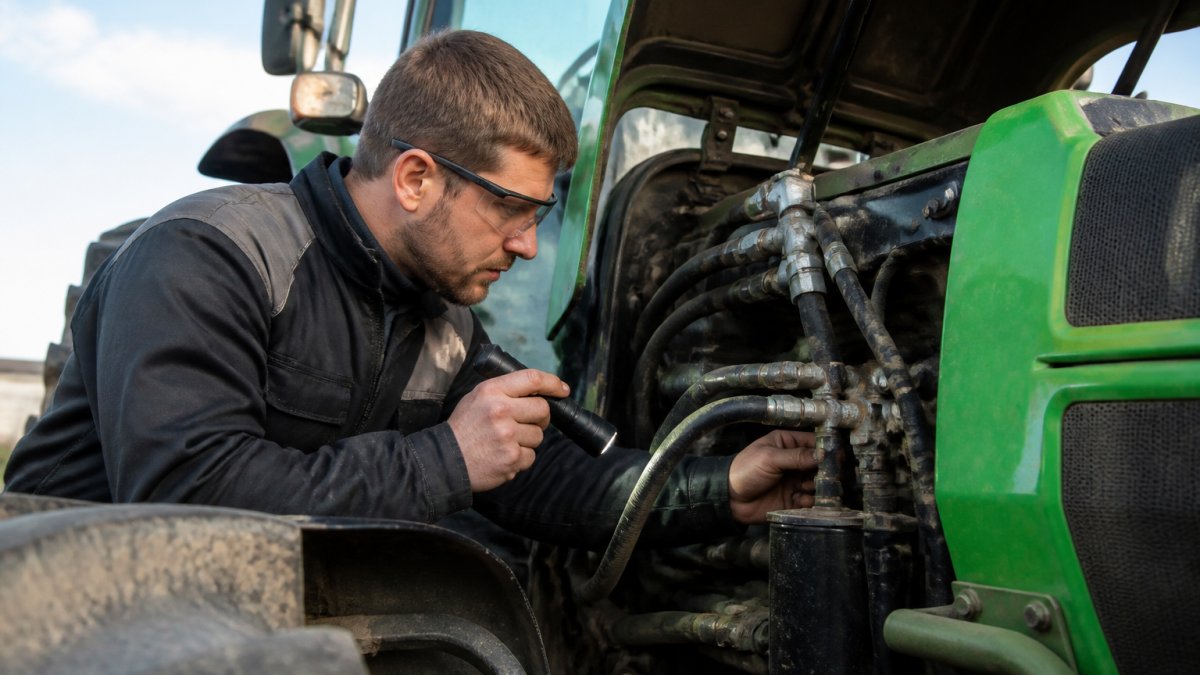
Buying used farm equipment requires a systematic inspection approach. A machine that looks fine from ten metres away might have hidden problems that cost thousands to repair.
Visual Inspection
Start with the obvious. Check for rust, corrosion, and structural damage. Surface rust on sheet metal is cosmetic; deep pitting in hydraulic cylinders or engine blocks signals serious problems.
Mechanical Systems
Move to the mechanics. Check fluid levels and condition. Dark, burnt-smelling engine oil indicates heavy use or poor maintenance. Hydraulic fluid should be clean and translucent; cloudy or dark fluid suggests water contamination or internal wear.
Start the engine (if it's a powered machine) and listen. Rough idling, knocking sounds, or excessive smoke are red flags. Run the hydraulic systems through their full range of motion.
Wear Indicators
Examine high-wear components. On a combine harvester, check the cutting blade for wear and damage. Look at brake pads, clutch condition, and bearing play in wheels and shafts.
Documentation
Ask for service records. Machines with documented maintenance history are lower risk than those without. The seller should provide information about major repairs, component replacements, and operating hours.
A common mistake is trusting the seller's word about condition. Inspect the machine yourself or hire an independent engineer for expensive equipment.
Agricultural Machinery Maintenance: Essential Parts to Keep in Stock
Successful farm operations depend on preventative maintenance. The machines that stay running longest are the ones where parts are replaced before they fail, not after.
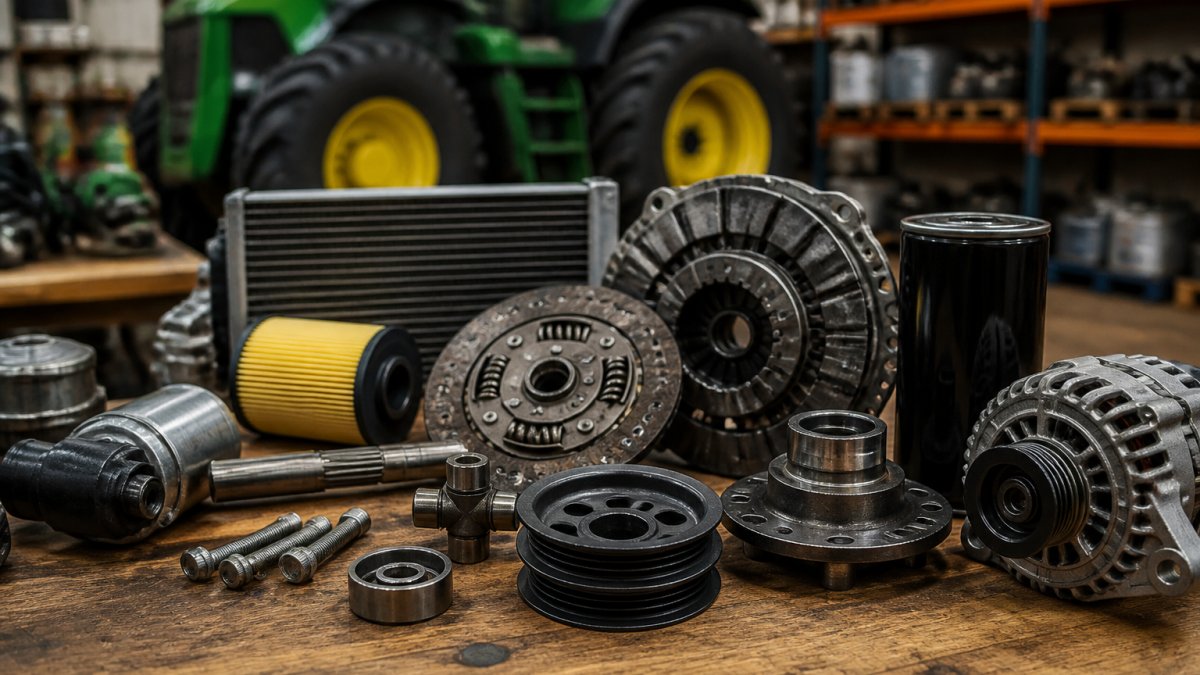
Build a maintenance inventory around your core equipment. For a tractor fleet, this means keeping spare belts, filters (air, oil, fuel, hydraulic), spark plugs, and hoses in stock. For combines and balers, add cutting blades, belts, and wear plates. For sprayers and spreaders, stock seals, nozzles, and wear parts specific to your models.
The 80/20 rule applies here: 80% of your breakdowns come from 20% of component types. Identify which parts fail most often on your equipment and stock those.
Establish a replacement schedule based on manufacturer recommendations and your own experience. Many farms replace hydraulic filters every 500 operating hours, air filters seasonally, and engine oil annually. Having these parts on hand means maintenance happens on your schedule, not when the part finally fails.
Storage matters too. Keep parts in a dry, organised space where you can find them quickly. Label bins clearly and track inventory so you reorder before stock runs out. A simple spreadsheet showing what you have, what you use monthly, and when to reorder prevents last-minute emergency orders.
Sourcing New and Used Agricultural Machinery Efficiently
Finding agricultural machinery parts efficiently requires a strategic approach. Random searches across multiple suppliers waste time and often result in incomplete information or wrong orders.
Start by consolidating your supplier base. Working with one trusted supplier who stocks a broad range of new and used agricultural machinery means you develop a relationship, understand their systems, and get faster service. You also benefit from bulk ordering discounts and faster delivery on regular items.
When you need something specific, provide complete information upfront. Include the machine make, model, year, and serial number. Describe what the part does and what problem you're trying to solve.
For hard-to-find parts, ask if the supplier sources from salvage or reconditioned equipment. Many farms successfully use reclaimed components from machines being scrapped, especially for older models where new parts are expensive or unavailable. Reclaimed parts cost less and perform just as well if inspected properly.
Build relationships with suppliers who understand agricultural operations. When you call with an urgent need during harvest, you want someone who grasps why that part matters now, not in three weeks. Agri-Linc's team understands farm timelines and works to get critical parts to you quickly.
Getting the Right Parts First Time: Avoiding Common Ordering Mistakes
Wrong orders are expensive. They cost you the price of the incorrect part, the cost of the correct part, and most importantly, the downtime while you wait for a replacement.
The most common mistake is ordering based on incomplete information. You know you need a hydraulic seal, but there are dozens of sizes and specifications.
Another frequent error is confusing similar-sounding part names. A "bearing" and a "bearing assembly" aren't the same thing. A "hose" and a "hose assembly" require different specifications. Read part descriptions carefully and ask clarifying questions before committing to an order.
Timing mistakes also happen. Ordering on Friday afternoon and expecting Monday delivery during peak season isn't realistic. Plan ahead for parts you know you'll need.
Verify compatibility before ordering. Just because a part fits the same machine model doesn't guarantee it works with your specific serial number or year variant. A five-minute phone call to confirm compatibility prevents a wrong delivery.
Finally, keep records of what you've ordered and what worked. Over time, you'll build knowledge about which suppliers are reliable, which parts perform well, and which ones to avoid. This institutional knowledge saves time and prevents repeated mistakes.
Conclusion
Sourcing reliable agricultural machinery parts shouldn't be a frustration. When you have access to a wide range of new and used agricultural machinery from a trusted supplier, you can focus on farming instead of hunting for parts. Agri-Linc's inventory of over 12,000 products from 140+ brands means you'll find what you need, whether it's an OEM component for a critical system or a cost-effective aftermarket part for routine maintenance. With over 100 years of family expertise and a 4.8/5 rating from more than 2,180 reviews, we're built to minimise your downtime and keep your operations running smoothly. Get in touch with our team today to discuss your machinery parts needs.
Component Type | When to Replace | Storage Tip |
|---|---|---|
Engine oil and filter | Annually or 500 hours | Keep sealed in original packaging |
Air filters | Seasonally or when clogged | Store in dry location away from dust |
Hydraulic fluid and filters | Every 500-1000 hours | Check fluid condition before use |
Belts and hoses | When worn or damaged | Inspect monthly during peak season |
Spark plugs | Annually or per manual | Label by machine type for quick ID |
Wear plates and blades | After visible damage | Keep manufacturer specs with parts |
According to the Health and Safety Executive guidance on farm machinery, proper maintenance and timely component replacement are essential for safe farm operations. Regular inspection of agricultural machinery parts prevents unexpected failures that could damage equipment or injure operators.
The National Farmers' Union guidance on equipment management emphasises the importance of maintaining detailed records of parts replacements and maintenance schedules to track equipment performance over time.
Research from the Royal Agricultural Society's farm management resources shows that farms with preventive maintenance programmes experience significantly fewer emergency breakdowns during critical harvest periods compared to farms relying on reactive repairs.
Frequently Asked Questions
What information do I need to identify the right agricultural machinery parts for my equipment?
You'll need your machine's make, model, and year of manufacture. Check your operator's manual or the equipment's data plate for exact specifications. Serial numbers help identify the specific variant. For hydraulic seals, filters, or belts, note the original part number if available. Having a clear photo of the worn component also helps suppliers match the correct replacement. When ordering from specialists, providing this detail prevents costly mistakes during peak season.
Are OEM agricultural parts worth the extra cost compared to aftermarket options?
OEM agricultural parts are manufactured to the equipment maker's exact specifications and typically offer better longevity and reliability, which matters during critical harvest periods. Aftermarket parts cost less but may have shorter lifespans or compatibility issues. For essential components like hydraulic seals, bearings, or engine parts, OEM parts reduce downtime risk. For wear items like belts or filters, quality aftermarket options can work well if sourced from reputable suppliers. Consider your operation's tolerance for downtime when choosing.
What should I check when inspecting used farm equipment before purchase?
Inspect the engine for leaks, corrosion, and smooth operation. Check hydraulic systems for fluid condition and leaks. Examine tyres or tracks for wear and damage. Test all controls and safety features. Look for rust, bent frames, or missing guards. Request service history and maintenance records. For older machinery, ask about recent repairs or component replacements. If possible, operate the equipment under load to confirm performance. Don't rush the inspection; a day spent checking now prevents costly repairs or downtime later.
Which farm machinery parts should I keep in stock for regular maintenance?
Stock engine filters (air, oil, fuel), hydraulic filters, and drive belts for your main machines. Keep replacement seals, gaskets, and hoses in common sizes. Store spare spark plugs, fuses, and electrical connectors. Include lubricants and hydraulic fluid meeting your equipment's specifications. Keep wear items like cutting blades or tines depending on your machinery type. Store fasteners (bolts, nuts, washers) in assorted sizes. Maintaining a small inventory of these essentials reduces downtime during peak season and helps you respond quickly to unexpected breakdowns.