 how-to
Power Harrow Settings for Seedbed: A How-To Guide
Table of Contents
- What You'll Need Before Adjusting Power Harrow Settings
- Understanding Power Harrow Working Depth
- Setting Your Power Harrow Rotor Speed Correctly
- Adjusting Power Harrow Forward Speed for Seedbed Quality
- Configuring Power Harrow Rear Roller Adjustment
- How to Assess Your Seedbed and Fine-Tune Settings
- Common Mistakes to Avoid When Setting Up Your Power Harrow
- Troubleshooting Common Seedbed Issues
- Frequently Asked Questions
Last Updated: 17 October 2026
What You'll Need Before Adjusting Power Harrow Settings
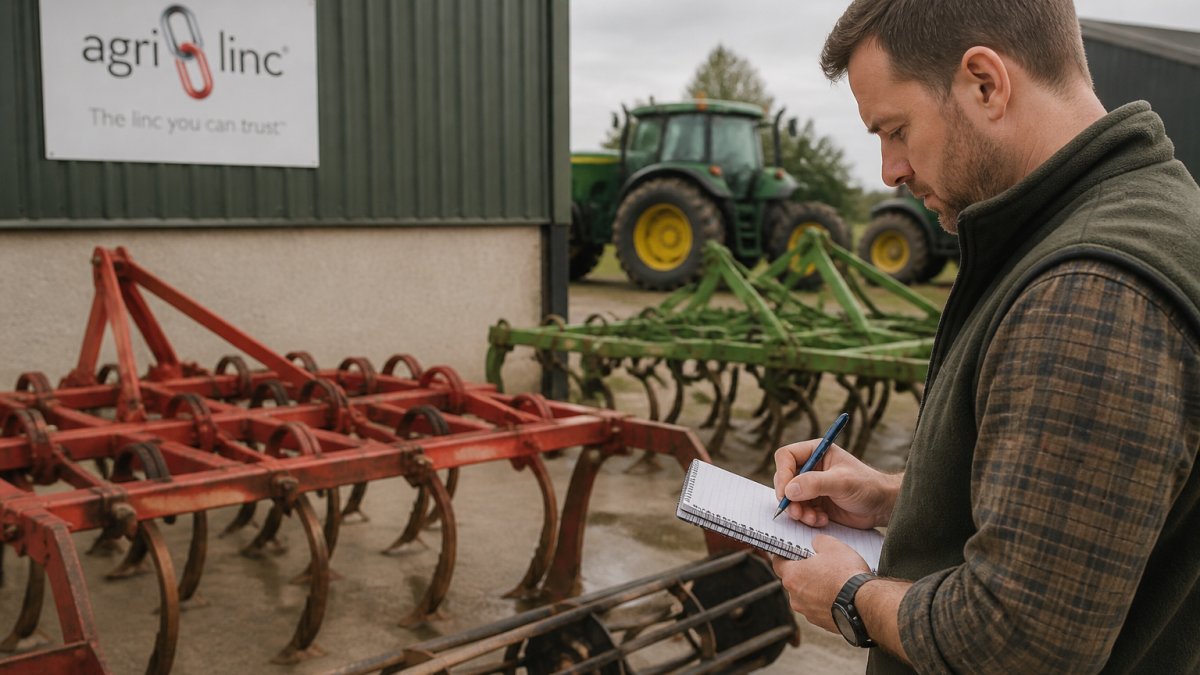
Getting your power harrow settings right starts before you touch a single adjustment. You'll need the machine's manual, a tape measure, and time to inspect your equipment properly. Most farmers skip this step and pay for it later with poor seedbeds.
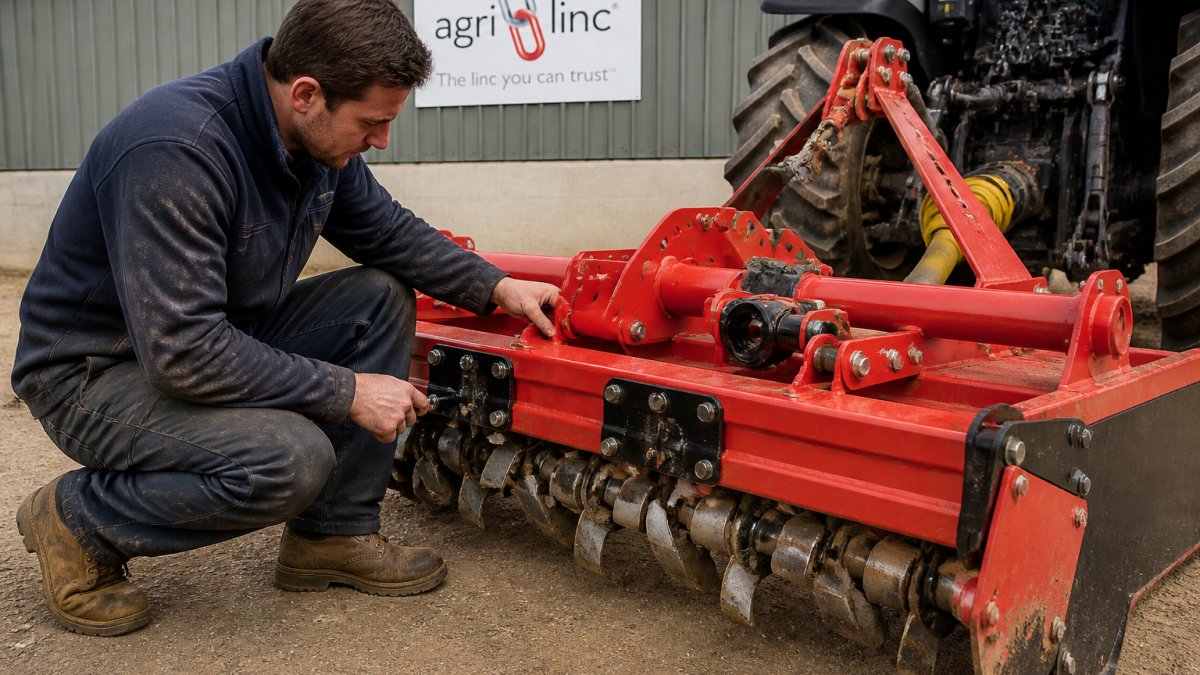
Check your rotor blades for wear. Dull or damaged blades won't break soil properly, no matter how well you adjust everything else. Inspect the rear roller for debris and damage too. A cracked roller creates uneven consolidation across your seedbed.
You should also assess your soil conditions. Wet clay behaves differently from sandy loam. The moisture content of your soil determines which power harrow settings for seedbed will work best. Measure soil moisture by squeezing a handful, if it forms a tight ball, it's too wet to work effectively.
Have your field marked out and know the soil type across different areas. Some fields have variable soil, which means you may need to adjust power harrow settings between passes.
| Equipment Check | What to Look For | Why It Matters |
|---|---|---|
| Rotor blades | Wear, chipping, damage | Dull blades won't break clods |
| Rear roller | Cracks, missing segments | Uneven consolidation ruins seedbed |
| Frame and linkage | Bent metal, loose bolts | Misalignment affects depth control |
| Soil moisture | Squeeze test (ball formation) | Wet soil needs different settings |
Understanding Power Harrow Working Depth
The working depth of your power harrow is the distance the rotor blades penetrate the soil. This is one of the most critical power harrow settings for seedbed because depth controls soil fragmentation and consolidation.
Most seedbeds need 50-75mm of working depth. Shallow settings (under 40mm) leave large clods. Deep settings (over 100mm) over-work the soil, creating a dust layer that dries out quickly and settles unevenly.
To set working depth correctly, locate the depth adjustment mechanism on your machine. This is usually a hydraulic cylinder or mechanical linkage at the rear of the harrow frame. Loosen the locking pin and adjust the position. Start with a moderate setting and make small changes, 10mm adjustments make a visible difference.
Drive a short test strip and check the soil. If you see large clods still present, increase depth slightly. If the soil looks powdery or over-worked, reduce depth. The goal is a crumbly, consolidated seedbed with minimal dust.
Setting Your Power Harrow Rotor Speed Correctly
Rotor speed determines how aggressively the machine breaks soil. Higher speeds create finer seedbeds. Lower speeds leave larger soil crumbs and work faster across the field.
The power harrow rotor speed is controlled by the PTO (power take-off) setting on your tractor. Most machines run between 200-400 RPM at the rotor. Check your manual for the recommended range, it varies by model.
Start at the lower end of the recommended range. Drive a test strip and assess the result. If clods remain, increase PTO speed by 50 RPM and try again. Keep adjusting until you achieve the soil fineness you want.
Higher rotor speeds increase fuel consumption and wear on blades. They also take more time to complete each pass. Lower speeds are more economical but may require extra passes for fine seedbeds.
Adjusting Power Harrow Forward Speed for Seedbed Quality
Forward speed is how fast you drive across the field. Slower speeds give the rotor more time to work the soil. Faster speeds cover ground quickly but produce rougher seedbeds.
The ideal power harrow forward speed depends on soil type and rotor speed. In clay soils, move slowly (4-6 km/h). In sandy loam, you can move faster (8-10 km/h). Heavier soils need more working time.
Match your forward speed to your rotor speed. If you increase rotor speed, you can increase forward speed slightly. If you reduce rotor speed, slow down your forward movement.
Watch your seedbed quality as you work. If you're leaving clods or uneven patches, slow down. Your tractor's ground speed should feel deliberate, not rushed. Most farmers find their sweet spot between 5-8 km/h for general-purpose seedbed work.
Configuring Power Harrow Rear Roller Adjustment
The rear roller consolidates soil after the rotor has broken it up. A properly adjusted roller creates a firm, level seedbed that won't settle unevenly later.
Rear roller adjustment controls how much downward pressure the roller applies to the soil. Too much pressure compacts soil excessively and creates a hard crust. Too little pressure leaves the seedbed loose and prone to settling.
Most rear rollers adjust via a hydraulic cylinder or mechanical linkage. Start with moderate pressure, roughly halfway between minimum and maximum. Make a test pass and check the result.
The consolidated soil should feel firm when you walk on it but not rock-hard. You should be able to press your boot heel into it without excessive force. If the roller creates a crust you can't break by hand, reduce pressure.
Inspect the roller surface for wear. Worn rollers don't consolidate evenly. If you see flat spots or significant wear, consider replacement. Agri-Linc stocks replacement clod boards for Kuhn models, available in 3-metre and 4-metre widths.
How to Assess Your Seedbed and Fine-Tune Settings
After each test pass, stop and examine your seedbed closely. Look for clod size, consolidation firmness, and surface evenness. This is where most farmers make their best adjustments.
Levelling Board 3 metre Clod Board to suit Kuhn Power Harrows 03/04 Series →
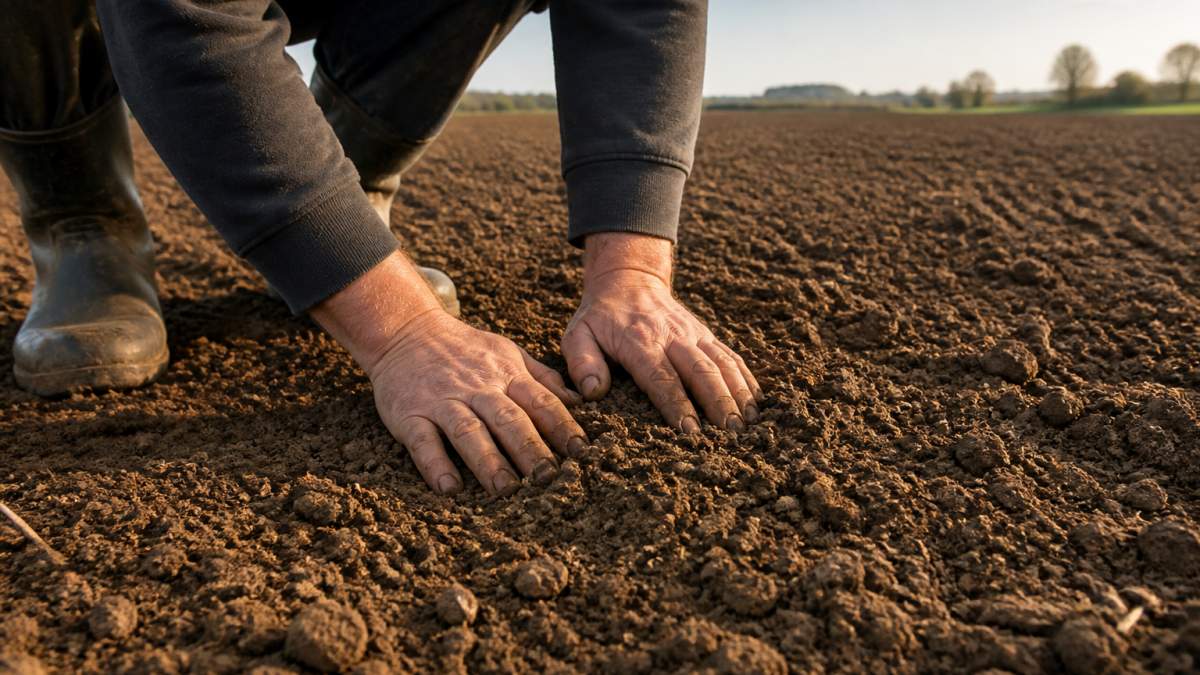
Press your hand into the soil. The crumbs should be roughly the size of your fingertip to your thumbnail. Larger crumbs mean you need more rotor speed or slower forward speed. Finer soil suggests you've over-worked it.
Check for consolidation by walking across the seedbed. Your boot should sink slightly but not disappear. The soil should feel stable underfoot. If it's too loose, increase rear roller pressure or make another pass.
Look for surface evenness. Ridges or hollows indicate uneven rotor depth or worn blades. Adjust your hydraulic linkage to level the machine if needed. A spirit level on the frame helps identify tilt.
Make one adjustment at a time. Change either rotor speed, forward speed, or working depth, not all three at once. This helps you understand what each setting actually does.
Common Mistakes to Avoid When Setting Up Your Power Harrow
Many farmers rush through power harrow settings for seedbed preparation and pay the price with poor germination. Here are the most common errors.
Starting with maximum rotor speed. New operators often crank rotor speed to maximum thinking it will produce a finer seedbed faster. It doesn't. Maximum speed creates excessive dust, wears blades rapidly, and uses more fuel. Start moderate and increase only if needed.
Ignoring soil moisture. Working wet clay is pointless. The soil won't break properly and will compact instead. Wait until soil has dried enough to crumble in your hand. This single mistake costs more time than any adjustment.
Skipping the test strip. Some farmers adjust settings once and assume they're correct for the entire field. Soil varies. Always run a test strip and inspect it before committing to full-field work.
Neglecting blade inspection. Dull blades force you to increase rotor speed and forward adjustments to compensate. Sharp blades do more work with less input. Inspect and replace blades every 40-50 hectares during heavy use.
Over-consolidating with the rear roller. A hard crust that cracks easily looks impressive but damages seedling emergence. Aim for firm, not rock-hard.
Troubleshooting Common Seedbed Issues
Large clods remain after work. Your rotor isn't breaking soil fine enough. Increase rotor speed by 50 RPM or slow your forward speed by 1-2 km/h. Check blade condition, dull blades won't fragment soil. If blades are worn, replacement is necessary.
Seedbed is too dusty and powdery. You've over-worked the soil. Reduce rotor speed or increase forward speed. Make fewer passes. Check that your rear roller is consolidating properly, a worn roller won't firm up loose soil.
Uneven consolidation across the width. Your frame may be tilted or the rear roller worn unevenly. Use a spirit level to check frame alignment. Inspect the roller surface for flat spots or damage. Worn rollers need replacement.
Soil settles and creates hollows after rain. Your consolidation is insufficient. Increase rear roller pressure slightly or make an additional pass. Ensure the roller is making full contact across its width.
High fuel consumption. You're likely running rotor speed too high or making unnecessary passes. Reduce rotor speed to the minimum that produces acceptable results. Increase forward speed if soil quality allows.
Machine pulls to one side. Check that your depth adjustment is even on both sides. Inspect for bent frame components. Uneven blade wear can also cause drift, replace worn blades in sets.
At Agri-Linc, we understand that getting your seedbed right determines your entire season's success. We stock replacement parts for power harrows, including Kuhn clod boards in multiple sizes to help you maintain your equipment's performance. When your harrow needs attention, quality parts keep you working without extended downtime.
Getting the right power harrow settings for seedbed preparation isn't complicated, but it demands attention to detail and willingness to test and adjust. Most farmers find their optimal settings within the first few passes of a season. Once you understand how depth, rotor speed, forward speed, and roller pressure interact, you can adapt quickly to different soil conditions and field situations.
Start with moderate settings, make one adjustment at a time, and inspect your work carefully. Your seedbed quality will improve, and your equipment will last longer.
Frequently Asked Questions
What is the best working depth for a power harrow?
Working depth typically ranges from 50 to 100 mm, depending on your soil type and crop requirements. Clay and heavy soils often need 60-80 mm, whilst lighter soils can work at 50-70 mm. Start conservatively and increase depth gradually as you assess seedbed quality. Shallow working produces finer tilth; deeper working breaks larger clods but uses more fuel and may bring up subsoil.
How fast should you drive when using a power harrow for seedbed preparation?
Forward speed for power harrow settings typically ranges from 6 to 10 km/h for optimal seedbed preparation. Slower speeds (6-7 km/h) produce finer, more consolidated seedbeds; faster speeds (8-10 km/h) reduce soil shattering but may leave larger clods. Adjust speed based on soil moisture, rotor speed, and the tilth quality you observe. Wet soil demands slower speeds to prevent compaction.
How do soil type and moisture affect power harrow settings?
Soil moisture is critical: work when soil is moist but not waterlogged. Dry soil produces excessive dust and clodding; wet soil causes compaction and smearing. Clay soils benefit from slightly slower forward speeds and higher rotor speeds; sandy soils tolerate faster speeds and lower rotor speeds. Always test a small area first and walk the seedbed to feel the texture before committing to full-width operation.
How can you tell if a power harrow is producing a good seedbed?
A good seedbed has fine, firm crumbs throughout the top 25-50 mm, with minimal clods larger than 10 mm. Walk across the prepared area and press the soil gently with your hand; it should hold together without being compacted. Look for a level surface with no ruts or ridges. If clods are too large, increase rotor speed or reduce forward speed; if the seedbed is too dusty or loose, reduce rotor speed or increase forward speed.